Skip to content
Product profile structureProducersInstitutionsResearchers
Research

The producer’s knowledge didn’t travel.

A turmeric producer in Erode can describe curcumin content, drying method, soil conditions, and traditional therapeutic use. By the time the product reaches the buyer, all that remains is a commodity code and a nutrition panel.

Altibbe Research studies why. The SGPIS series examines structural gaps in product information systems — where producer-level information is generated, lost, or made non-portable across markets and institutions.

Research by Altibbe · Methodology by HEDAMO

Selected papers
A research workspace at dusk — laptop showing a coffee plantation, handwritten field notes, a coffee cup, and an oil sample on a wooden desk
Research overview

What Altibbe has identified.

Product information systems have a structural gap. The information that exists at the producer level — about origin, practices, testing, claims, and gaps — does not travel in a form that remains readable, comparable, or useful across markets, institutions, consumers, and research contexts.

Altibbe Research documents this gap through the SGPIS series. Each paper addresses one dimension of the problem: nutrition labelling, certification thresholds, trade corridor information, geographic indication, or system-level intelligence gaps. The research is the foundation. HEDAMO is the applied methodology that structures the producer-level information layer the research identifies as missing.

Health · a thread

Health is the first public-interest reason the disclosure gap matters. When product-level health attributes cannot travel with a product — cannot accumulate across system boundaries — public health, consumer understanding, and institutional procurement all operate with less information than they need.

SGPIS series

Structural Gaps in Product Information Systems.

Selected papers from an ongoing series.
Governance & Quality18 min read · 15 pp

Traceability Without Disclosure

Why Movement Data Does Not Constitute Product Intelligibility

A product may pass through a fully compliant traceability regime and still carry no portable, producer-declared description of what it is. This paper diagnoses that gap and proposes a design framework for a complementary disclosure layer.
Shams Ahmed · 2026 · CaliforniaRead paper
DOI: 10.5281/zenodo.20375829Published by Altibbe Research
Synthesis19 min
SGPIS-SY-01

What the Product Knows: India's Missing Intelligence Layer

India's documentation stack answers admissibility but not intelligibility. This synthesis maps the non-accumulation mechanism, why TraceNet was not generalized, and what any viable structural response would require.
2026 · California · 19 ppRead →
DOI: 10.5281/zenodo.20375823Altibbe Research
Producer Identity8 min
SGPIS-PI-01

Geographic Indication Without Disclosure Depth

GI systems protect origin names effectively, but they do not document producer-level attributes. This paper examines the structural consequences for trade, buyers, and producers.
2026 · California · 9 ppRead →
DOI: 10.5281/zenodo.20375819Altibbe Research
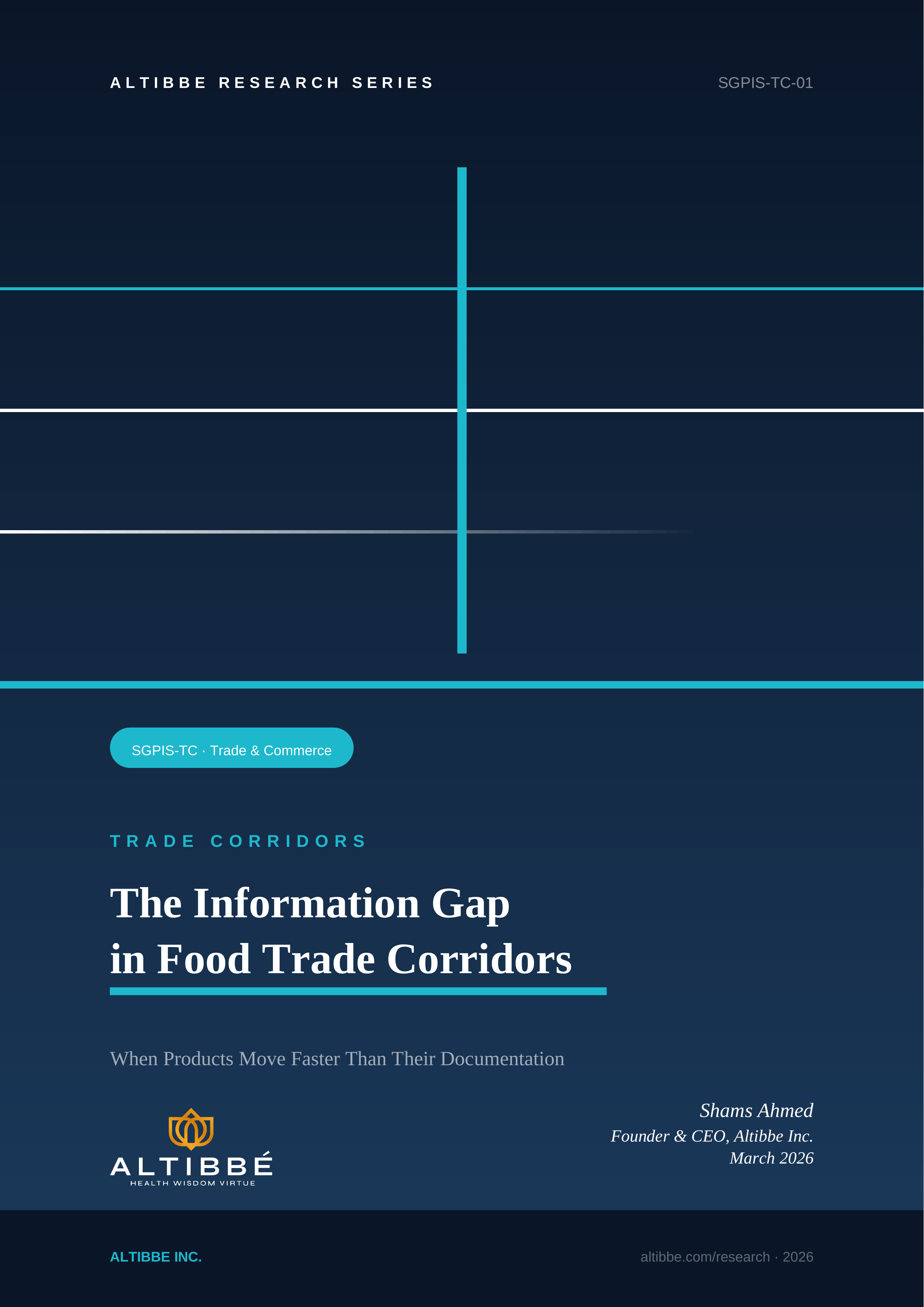
Trade & Commerce13 min
SGPIS-TC-01

The Information Gap in Food Trade Corridors

Food trade corridors run on documents built for clearance, not communication. The gap is structural: products move through borders faster than producer-level information can travel with them.
2026Read →
DOI: 10.5281/zenodo.20375811Altibbe Research
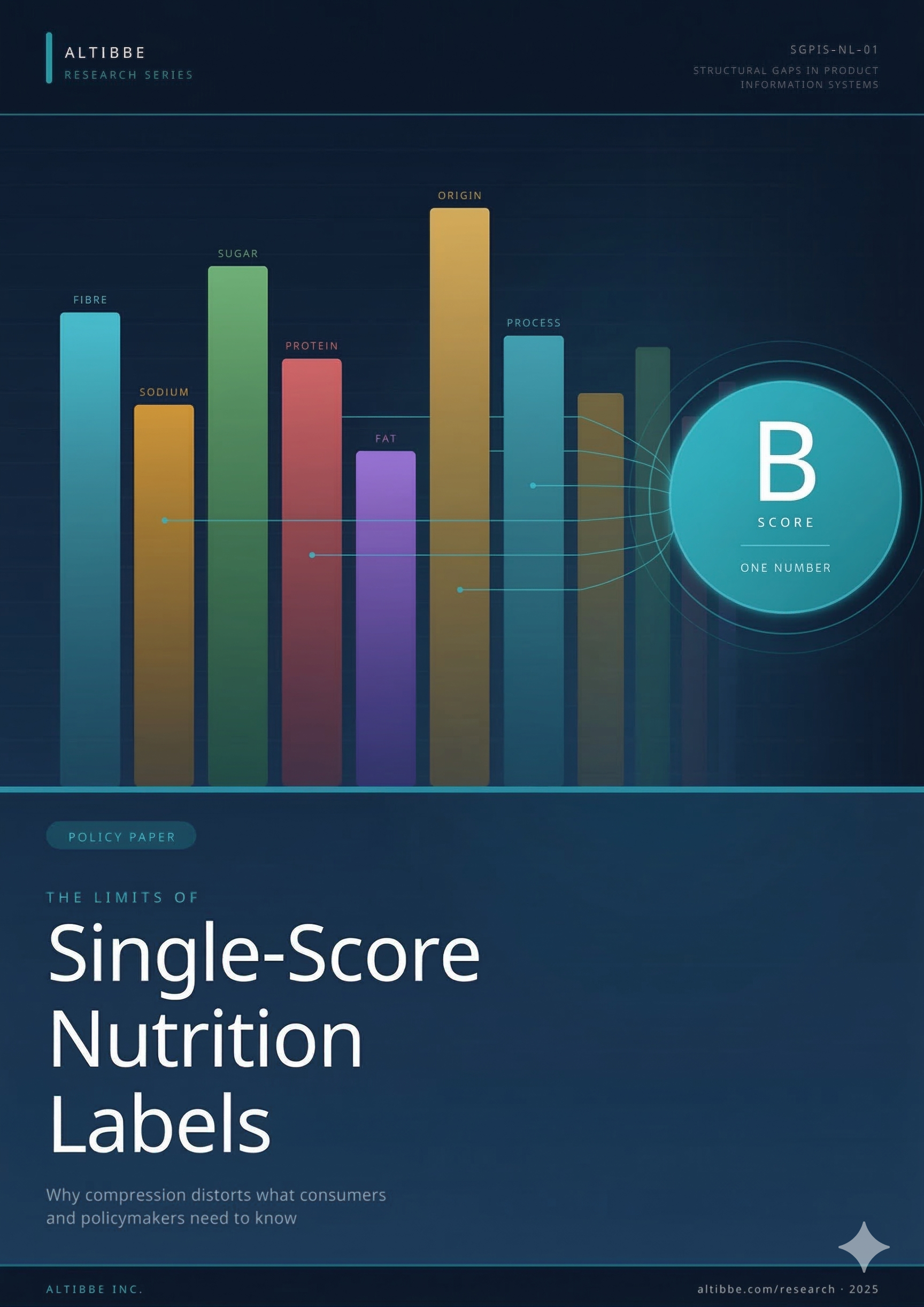
Nutrition & Labeling9 min
SGPIS-NL-01

Single-Score Nutrition Labels

Moreover, single-score reductionism systematically penalizes traditional and minimally processed cultural foods while disproportionately rewarding highly engineered formulations. By replacing nuanced human interpretation with opaque algorithmic compression, current labeling paradigms create friction in international trade, distort consumer decision-making, and fail to reflect granular dietary realities.
2026Read →
DOI: 10.5281/zenodo.20375569Altibbe Research
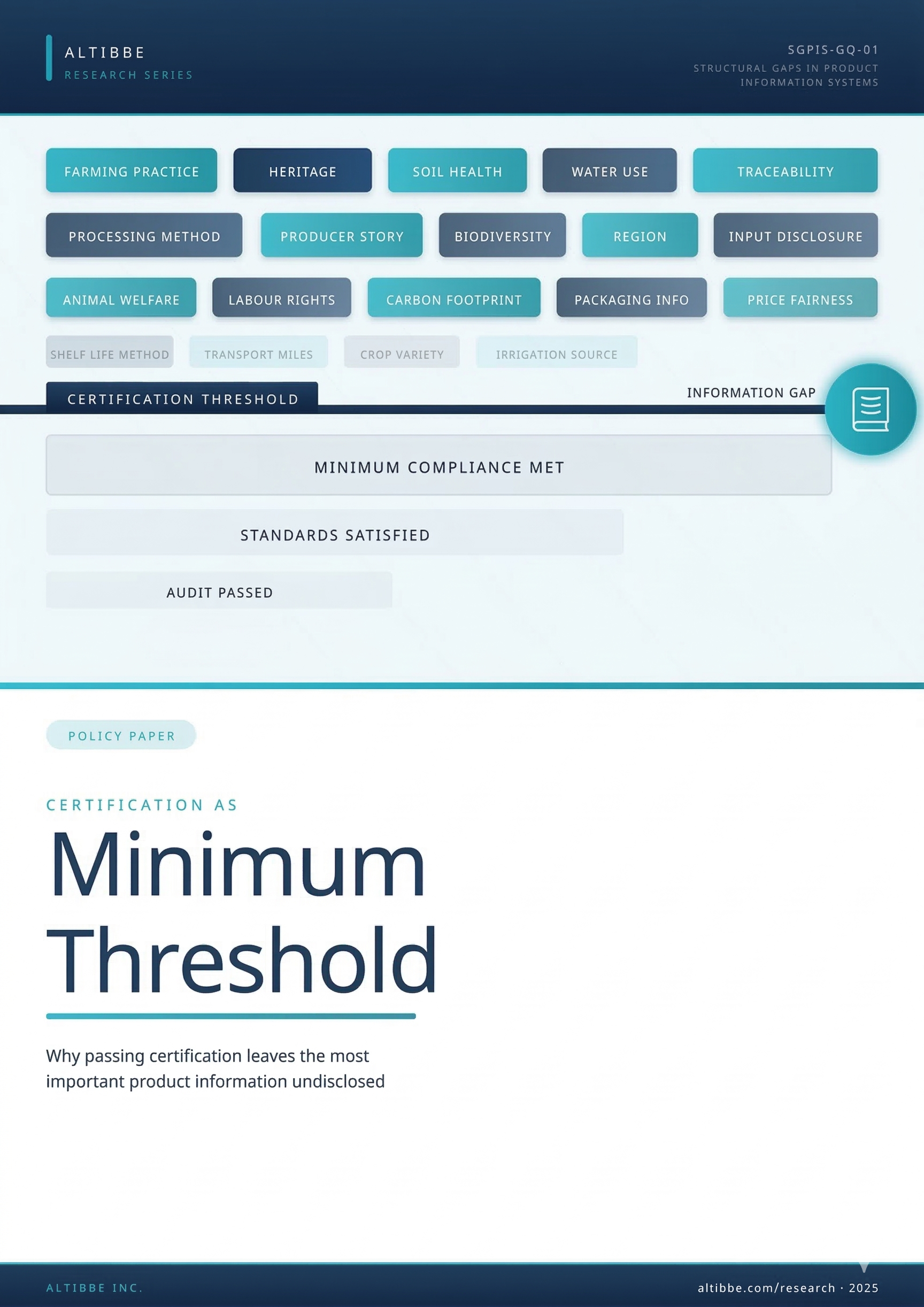
Governance & Quality12 min
SGPIS-GQ-01

Certification as Minimum Threshold: Why Quality Systems Establish Acceptability, Not Differentiation

Certification establishes a minimum threshold; it does not explain what distinguishes one producer from another. This paper diagnoses the structural gap and proposes information-layer approaches.

2026Read →
DOI: 10.5281/zenodo.20375805Altibbe Research

The research is the foundation. HEDAMO is the disclosure methodology built from it.

Future scope testing may examine adjacent categories — cosmetics and textiles — where producer-declared origin, inputs, and health-adjacent attributes are similarly absent from buyer-facing information.